In the heart of Osu, not far from the walls of Osu Castle (Fort Christiansborg), stands the historic remains of Richter House, often called Richter Fort. Built around 1807–1809, the structure was once one of the most influential private compounds on the Danish-controlled Gold Coast. Today it survives as a rare example of the Euro-African merchant architecture that shaped the social, economic, and political landscape of early Accra.
Richter House was established by Henrich Richter (1785–1849), a wealthy Euro-African merchant and son of Danish official and trader Johan Emanuel Richter. The Richter family operated deeply within the commercial networks of the Danish forts, dealing in commodities, politics, and—most tragically—human lives.
By the early 19th century, Henrich Richter had become one of the most powerful private traders in the region. His house, positioned on a busy Osu roadway, functioned not only as a residence but also as a fortified trading base. Historical accounts describe an estate with large rooms, thick defensive walls, and space for hundreds of workers—free and enslaved—who maintained his commercial operations.
One of the most chilling and historically significant features associated with Richter House is the underground tunnel connecting it to the dungeons of Osu Castle.
Research by historians, archaeologists, and human-rights scholars reveals that:
The tunnel likely served as a covert passage for transporting enslaved Africans directly from the house to the holding cells beneath Osu Castle.
The passage allowed merchants like Richter to move captives discreetly, avoiding Danish taxation and regulatory oversight.
The tunnel contains small chambers and narrow corridors consistent with the forced movement and confinement of human beings.
Its existence underscores how private trading families played a direct role in the slave trade, working alongside the official colonial fort structure.
Today, although sections of the tunnel are sealed or collapsed, portions remain documented through mapping, oral history, and archaeological study.
Richter House is more than the ruin of a colonial merchant’s mansion. It is:
A testament to the entanglement of European traders and local Ga communities through marriage, politics, and commerce.
A physical remnant of the darker networks that supported the transatlantic slave trade.
A symbol of the contested memories of colonialism—heritage on one side, historical trauma on the other.
A key architectural witness in Accra’s ongoing efforts to document and preserve sites connected to slavery.
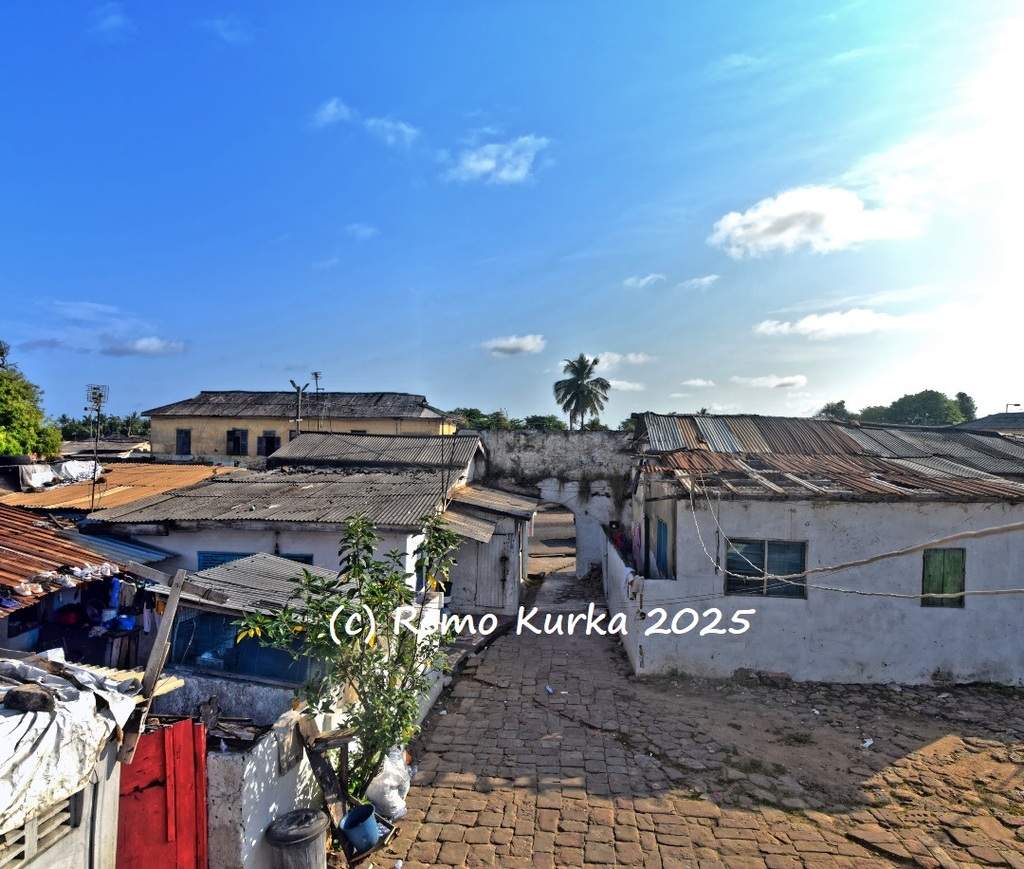
Richter House (Richter Fort), Osu – A Hidden Stronghold of Trade, Power, and Slavery
Richter House stands among the last surviving structures connected not only to the Danish presence in Ghana but also to the hidden infrastructure of the slave trade—invisible systems built into private homes, tunnels, and informal networks.
Its story challenges visitors and historians to confront a difficult truth:
The machinery of slavery extended far beyond official forts—it lived in homes, family enterprises, and local power structures.
Preserving Richter House is essential for understanding the broader human, architectural, and political history of Osu, Accra, and the entire West African coast.
(All links listed clearly for research and verification.)
The Nana Project – “Richter Fort: A Site of Enslavement and Contested Histories in the Heart of Osu, Accra”
https://www.thenanaproject.org/written-stories/richter-fort
Journal of Modern Slavery – Collins Quartey: “The Ghost at the Junction: Exploring the Links Between Historic and Modern Slavery in Accra, Ghana”
https://slavefreetoday.org/journal_of_modern_slavery/v7i1a3-the-ghost-at-the-junction-exploring-the-links-between-historic-and-modern-slavery-in-accra-ghana.pdf
The World (PRX) – “Slavers in the family: What a castle in Accra reveals about Ghana’s history”
https://theworld.org/stories/2019-08-19/slavers-family-what-castle-accra-reveals-about-ghanas-history
Arts Ghana – “Descendants of slave traders excavate Christiansborg”
https://artsghana.net/descendants-of-slave-traders-excavate-christiansborg
Quartz Africa – “Ghana’s Danish Osu Castle and its role in the slave trade”
https://qz.com/africa/1476624/ghana-s-danish-osu-castle-its-role-in-slave-trade