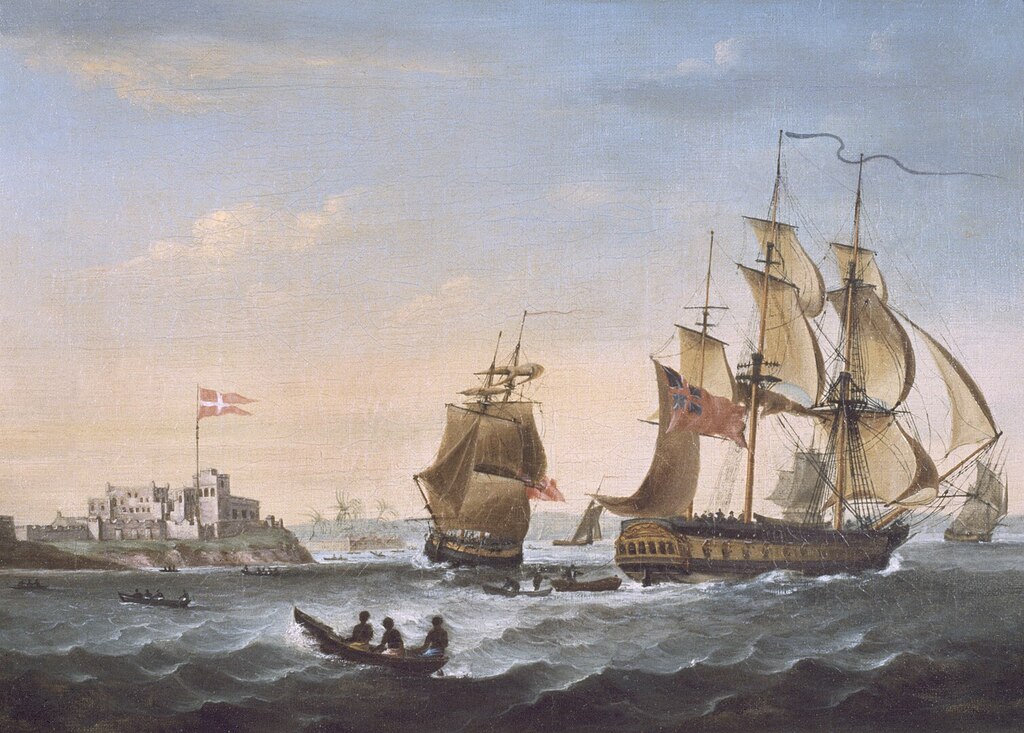
The early years at Christiansborg were tumultuous. In 1679, a mutiny erupted, leading to the assassination of the Danish commander. The fort's leadership then fell to a Greek man named Bolten, who eventually sold it to the Portuguese. The Portuguese, who renamed the fort St. Francis Xavier, fortified it further and added a Roman Catholic chapel. However, after a few years of disappointing trade, they decided to sell it back to the Danes in 1683.
But the fort’s fortunes were far from stable. In 1693, the fort was seized by Assameni, a powerful trader and chief from the Akwamu kingdom. Assameni had once worked as a cook in the Danish household and had infiltrated their ranks. He took control of the fort and began trading with various nations, making it a hub of commerce for nearly a year. In 1694, he sold the fort back to the Danes for a hefty sum of 50 marks of gold. However, Assameni kept the keys, and to this day, they remain a part of Akwamu's stool property, a powerful symbol of their brief but significant control.
As trade in gold and, later, enslaved people flourished, the Danes expanded the fort considerably, increasing its size nearly fourfold. However, the abolition of the slave trade by Denmark in 1803 dealt a significant blow to the fort’s role in trade, causing a severe economic decline.
In 1850, the Danes sold Christiansborg Castle to the British, marking another chapter in its storied history. By 1876, the British colonial governors were ruling from the castle. Yet, from 1890 to 1901, it was abandoned as a government seat and instead served as a constabulary mess and even a psychiatric asylum during this period of neglect.
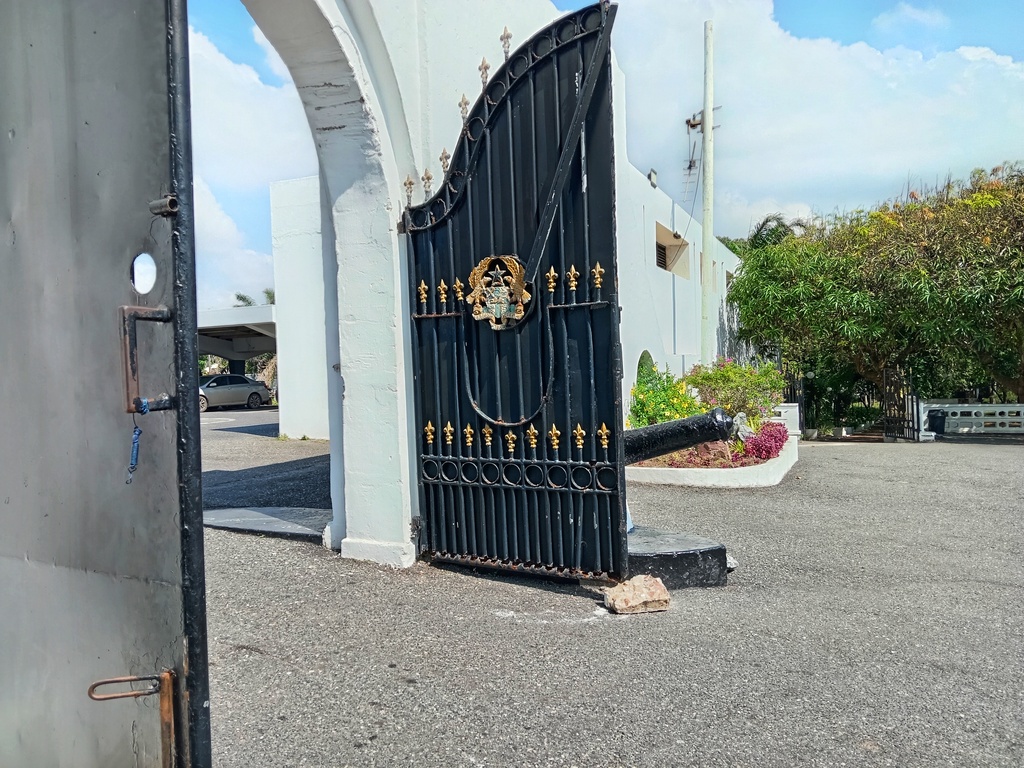
The castle was once again reestablished as the seat of government in 1902. Today, it stands as a symbol of Ghana’s rich historical tapestry. It houses the offices that were once used by past Presidents of Ghana, continuing to play a significant role in the nation’s political and cultural life.
Christiansborg Castle is more than just a structure—it's a living testament to the complexities of Ghana’s past, reflecting centuries of colonization, trade, and shifting power dynamics.
⚓ Christiansborg Castle: A Gateway of Sorrow
From the late 1600s to the early 1800s, Christiansborg Castle was transformed from a modest fort into a sprawling complex to accommodate the booming trade in enslaved Africans. Originally built for gold and ivory exchange, the castle’s expansion was driven by the brutal efficiency of human trafficking. It became one of the key departure points for enslaved people bound for the Danish West Indies—modern-day U.S. Virgin Islands.
🔗 The Human Toll
Approximately 126,000 Africans were forcibly taken through Danish-controlled forts like Christiansborg Castle.
Captives were held in cramped, dark cells, shackled with iron collars and chained to heavy blocks. Many were kept in town due to limited space inside the castle itself.
The infamous “door of no return” marked the final exit—captives were lowered into boats and ferried to slave ships offshore. Nearly 40% died during the Middle Passage due to disease, starvation, and abuse.
🧬 Cultural Disruption and Diaspora
Entire communities were destabilized. Families were torn apart, and local economies were distorted as human beings became commodities.
The slave trade contributed to inter-ethnic conflict, as some groups were armed and incentivized to raid others for captives.
Ghanaian cultural heritage was scattered across the Atlantic. Today, descendants of those enslaved live in the Caribbean, North America, and Europe, often disconnected from their ancestral roots.
💰 Economic Consequences
Denmark profited immensely. Between 1688 and 1747, Danish ducats bore the image of Christiansborg Castle—a symbol of its economic importance.
Yet the wealth generated did not benefit local populations. Instead, it entrenched colonial dominance and widened inequality.
After Denmark abolished the slave trade in 1803, trade collapsed, and Christiansborg Castle was eventually sold to the British in 1850